In our digital search-driven world, it’s important to know how people are searching. Users today no longer follow a linear path, from awareness to conversion. Instead, they hop between questions, micro-moments, intent-driven actions, and comparisons. For businesses seeking ways to scale their online visibility, understanding the different types of “search queries” to form a strategic search plan. For a performance-focused SEO agency, Skylark SEO, learning the depth of user behavior can attain meaningful conversations, stronger audience engagement, and better rankings.
So, considering this, there is so much to take into account regarding user behavior. You can figure out: what are the types of search queries that should be of concern to brands? & What strategies will enable brands to target those types of search queries effectively?
Let’s break down the essential query types and explore practical strategies to optimize for them.
1. Informational Search Queries

An informational query search is a user’s “curiosity” search; this means that the user is looking for an answer to their question, information, an explanation, or a solution to a problem, and they are typically not interested in making a purchase at this time. Still, they’re starting to build awareness of brands that may help them find the solution to their problem.
Informational query examples:
- “What is schema markup?”
- “How to optimize website speed?”
- “Benefits of organic SEO?”
How to Effectively Target Informational Queries:
- Blogs that are long-form, well-structured, and educational in nature will rank better and keep readers on the page for longer.
- Landing pages that provide users with knowledge carry a lot of weight in the search engines; this is especially true of glossaries, resources, and FAQ pages.
- Structured data is essential for anything that appears as a featured snippet, people also ask, or knowledge panel.
Informational queries provide brands with top-of-funnel traffic, and if brands want to invest in digital marketing solutions in the USA, they will likely use this as a starting point for nurturing prospects over time.
2. Navigational Search Queries
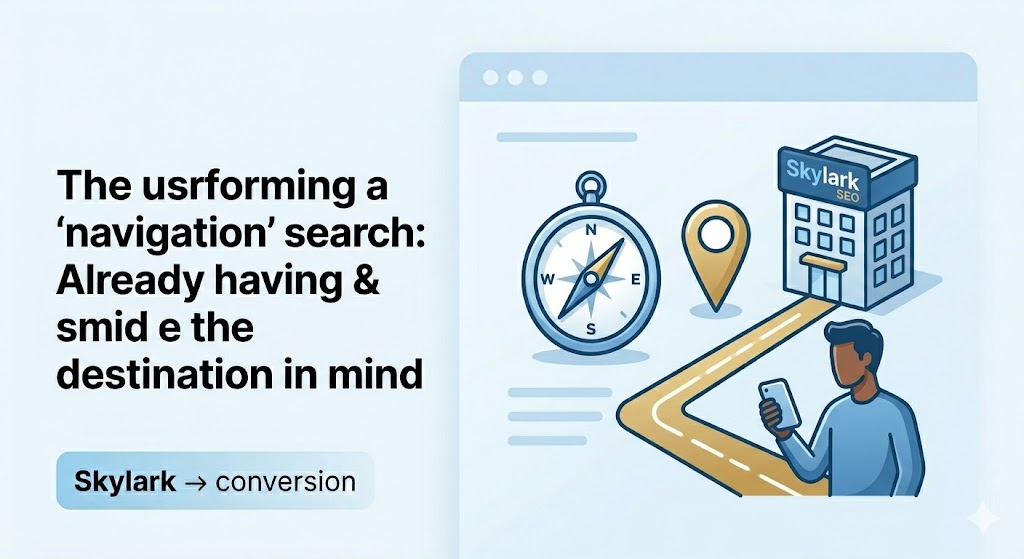
When a customer utilizes Google for directions, but they already have an end destination in mind, they are said to be performing a navigational search; these customers already have brand recognition, but they don’t have an exact URL to visit.
Examples of navigational queries include:
- ‘Skylark SEO Website,’
- ‘Shopify sign-in,’ and
- ‘SEMrush price page.’
There are a number of strategies for capitalising on navigational queries.
Strategies for Targeting Navigational Searches:
- To capitalize on navigational queries, you can enhance the visibility of your branded keywords by appearing on page one for your company’s name(s), product(s), and service(s).
- To protect your real estate in the SERPs, you need to have a clear and easy-to-follow navigation structure and a strong internal linking strategy; this will allow Google to create sitelinks.
- You can also create dedicated brand pages to help users locate the specific product, service, or resource for which they are searching.
Since navigational searches are so commonly associated with making a purchase, they convert well. It is because the user knows what they want and simply needs to find the right path to get there.
3. Commercial Investigation Queries
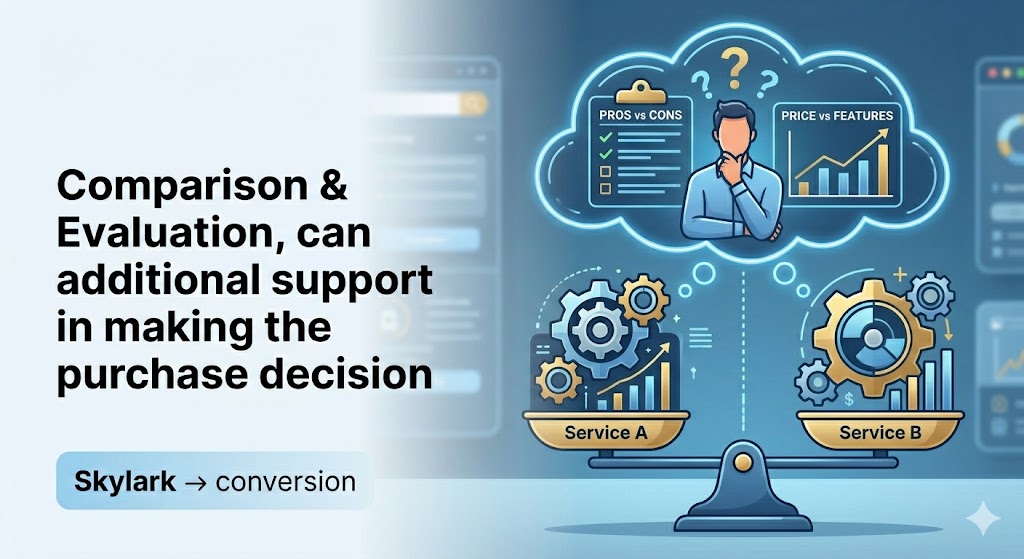
The search for this kind of information usually falls under the comparison or evaluation of different products. The user is likely not the buyer at that moment, but is on the verge of becoming a buyer and needs additional support in making the purchase decision.
Examples include:
- “A list of the best SEO companies in 2026”
- “A comparison between Ahrefs and Semrush”
- “The best customer relationship management software for startups”
To capitalize on these users who are looking for commercial investigation, brands should:
- Publish Comparison Guides, such as what are the pros and cons, what is price and what are the right features? These types of blog posts can be very useful.
- Create a “best of” list/blogs. These are typically shared a lot, so they can also rank very high in competitive industries.
- Provide Downloadable Buyer Guides. These will help collect leads for your business and will be very valuable to the customer when they’re looking for information.
- Optimize (SEO) Reviews. Brands should also provide star ratings, reviews from customers, as well as provide evidence (case studies).
The information provided for those conducting commercial investigations can also be used to establish trust, especially when the content is user focused and has clear, credible evidence supporting it.
4. Transactional Search Queries
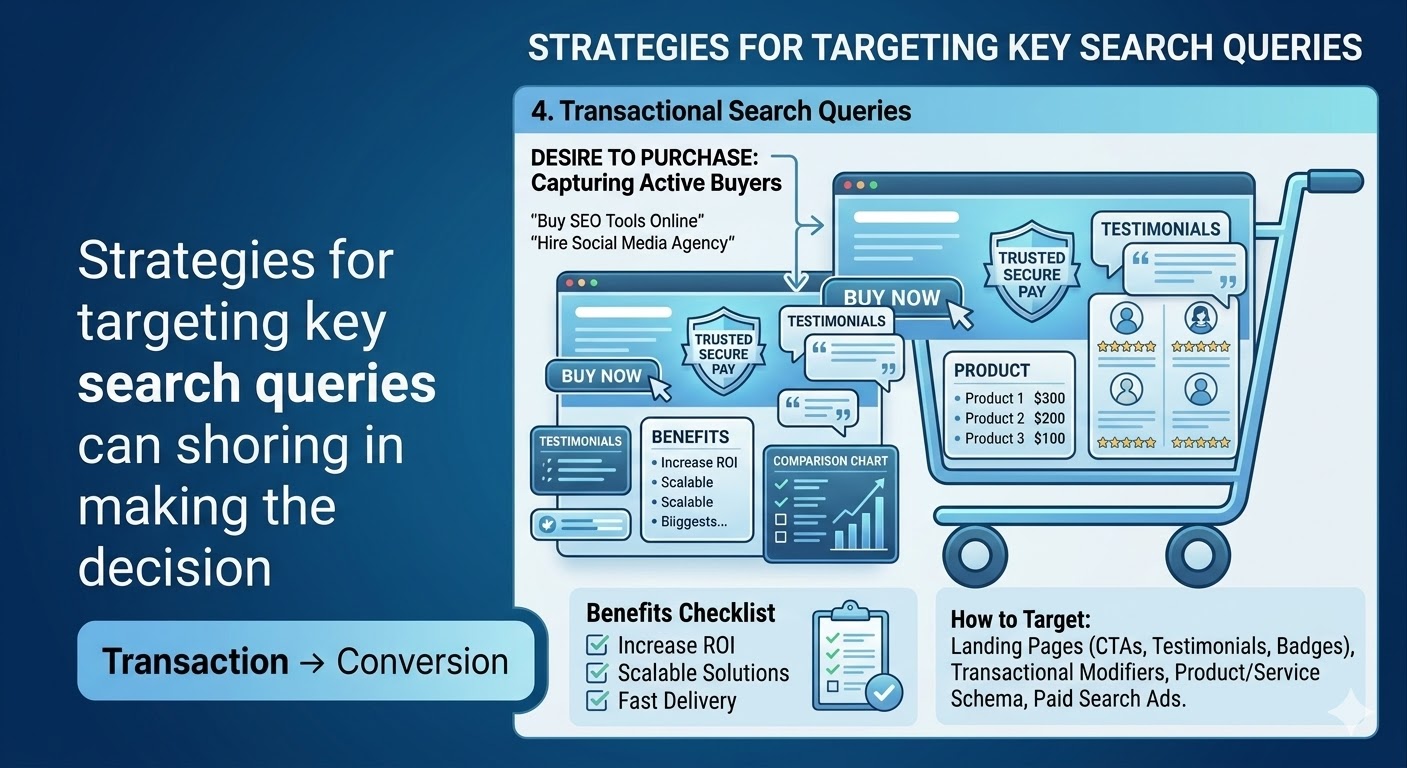
The next phase in our analysis includes defining a transactional query as an indication of someone else’s desire to make a purchase or use a service. In the case of transactional queries, users have expressed an active desire to purchase a good or service as opposed to simply browsing.
Examples of transactional queries include:
- “Buy SEO Tools Online”
- “Hire Social Media Agency”
- “Best Subscription for Project Management Software”
How to Target Transactional Queries
- Create Landing Pages that Focus on Converting Visitors into Customers
Use Call-to-Action (CTA), Trust Badge, Testimonials, Benefits, and Comparison Chart.
- Use Transactional Modifiers in Your SEO Copy
Transactional modifiers are those words that have been established to help Google identify users with a transaction intent. Some of the more popular transactional modifiers include: buy, hire, price, for sale, and services.
- Optimize Your Product/Service Schema
Using schema will help Google display rich snippets for your landing pages, including pricing, FAQs, and user-generated reviews.
- Create Paid Search Ads Targeting Transactional Queries
Paid search ads can increase the visibility of high-intent keywords in tandem with an efficient SEO strategy. Many businesses invest in PPC Marketing Services USA to strengthen their organic reach and provide a fast track to generating sales.
If your business is heavily reliant on leads, it is critical that you target transactional queries in order to increase the volume of leads.
5. Local Search Queries
Locally-based queries show an intention to search geographically. Local Searches can be done using the URL to locate and map the local proximity to businesses. In a Service-Based Business, this may be a large portion of organic search traffic.
Examples include:
- SEO Agency Near Me
- Restaurant Open Now
- Plumber NY
How To Target Local Search Queries:
- Optimize Your Google Business Profile.
Include pictures, categories, and reviews on the profile, and include all the fields listed with your NAP (name, address, phone number) information.
- Create Local Citations.
Use local business directories to create local citations to enhance legitimacy and increase exposure in the respective geographic area for your business.
- Create Location-Based Landing Pages.
For each city or region that your business services, make a separate page to showcase unique content specific to that location.
- Request Reviews From Customers.
Google favors businesses with a strong and consistent amount of reviews. Local Searches are essential for service-based brands, but also, agencies offering fulfillment services can also be successful through this means.
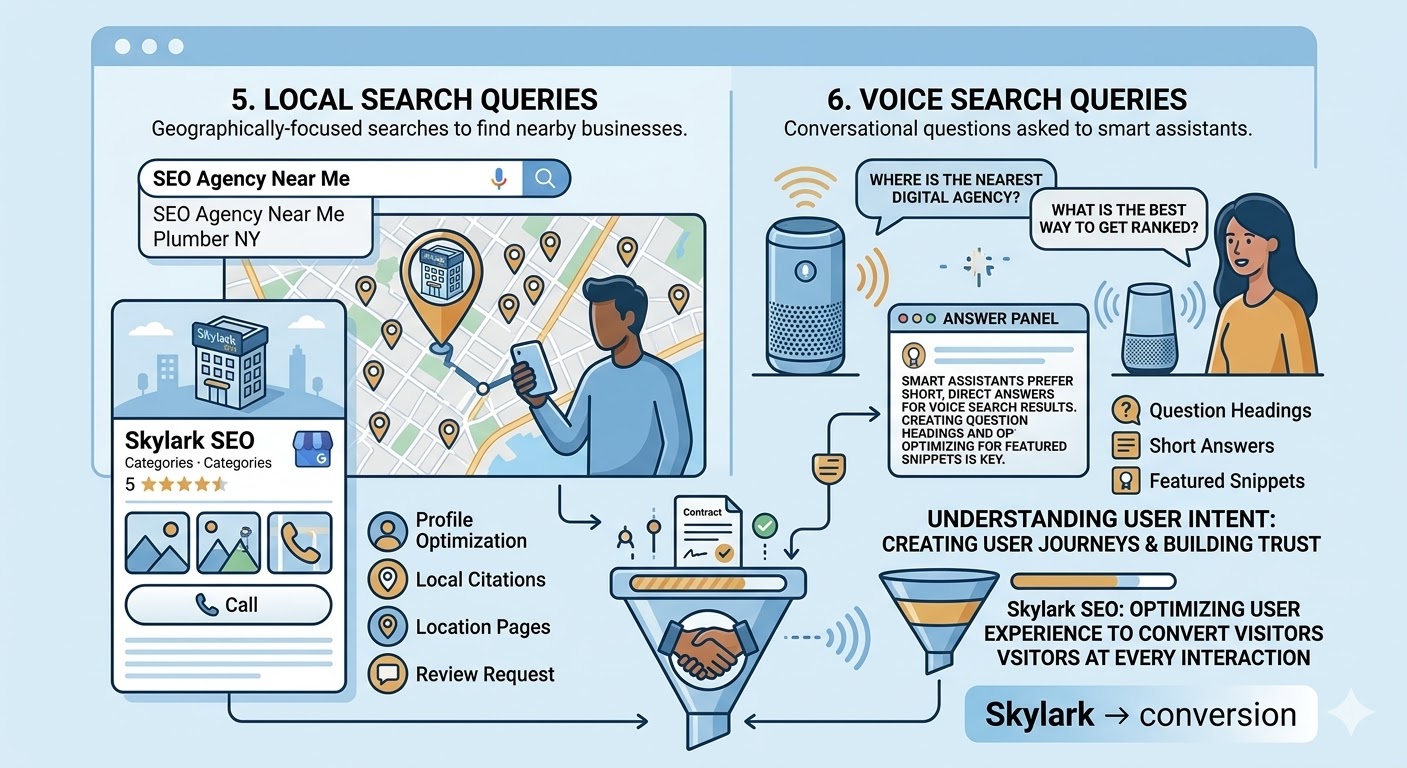
6. Voice Search Queries
The rise of smart assistants has increased the relevance of natural language search queries. Voice-based questions are typically longer and more conversational than text-based queries.
Examples of voice search queries:
- “What is the best way to get ranked in an online search?”
- “Where is the nearest digital agency?”
How to Optimise for Voice Search Queries
- Write question-based headings: Voice Searches are often phrased as questions.
- Provide answers within the 40-50 word range: Smart assistants typically prefer short, direct answers.
- Focus on featured snippets in your content creation, as most Voice Search returns results from Featured Snippets.
The future of Voice Search is a permanent shift in the way online content will be created and understood.
Conclusion
When a brand understands how users search for products/services: it does not just mean ranking well (“driving” website traffic) for target phrases, but it means creating user journeys, answering user questions, and gaining user trust. In a very competitive online environment, creating that type of user journey is what distinguishes today’s successful brands.
Skylark SEO, a renowned white label SEO firm, focuses on understanding user intent, creating optimised user experiences based on that understanding, and converting website visitors to paying customers at every interaction. We specialize in using the apt tools and implement strategies needed to leverage a query-based SEO investment for business growth.