Every business wants to be visible online. In a digital-first world, being visible online is more important than ever, as that’s how consumers can find you. If your business is a small local service or retail eCommerce business, or a large enterprise, you need to be on the search engines. The problem is that there are two powerful tools that help generate online visibility: SEO and SEM. However, many businesses confuse these terms.
Both SEO and SEM enable businesses to be found in search engines, but their methods are different from each other. By understanding the fundamental differences between SEO and SEM, businesses can choose either of these strategies or a combination of both to achieve their desired level of growth.
Skylark SEO, a well-established digital marketing and SEO agency, frequently advises clients on when to use SEO-only, SEM-only, or both SEO and SEM for maximum effectiveness.
What Is SEO?
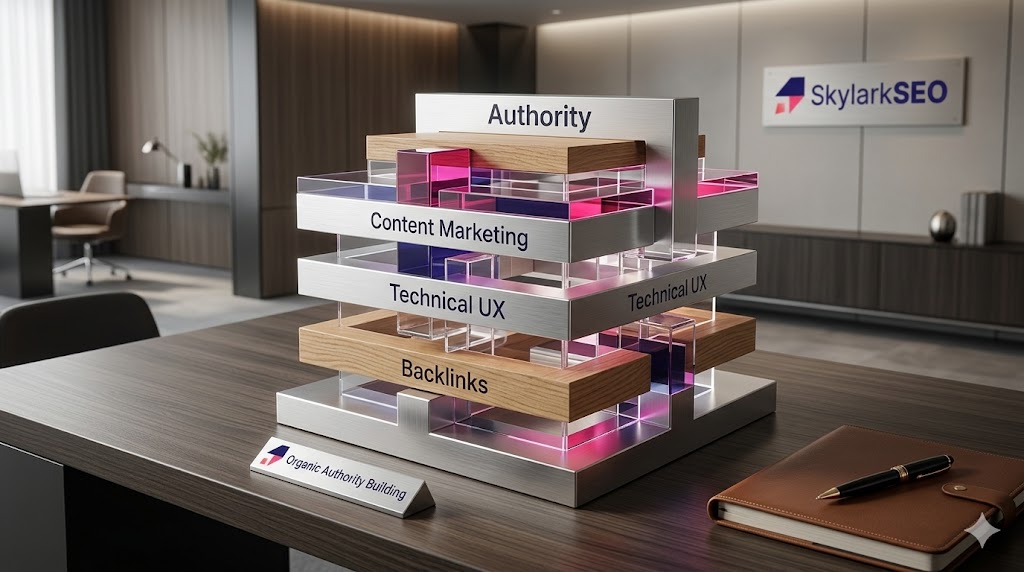
Search Engine Optimization (SEO) is a technique for boosting a website’s ranking on search engine results pages (SERPs) without resorting to paid ads. The primary distinction between SEO and PPC (Pay-Per-Click) advertising is that you pay for the exposure through PPC ads. On the other hand, SEO helps you earn organic traffic by optimizing your website content, improving user experience, building backlinks to your site, and ensuring that your website is technically sound.
The primary objective of SEO is to bring in as much organic traffic as possible and continue growing that traffic. For this reason, many companies choose to work with an expert requiring professional SEO services to jumpstart their SEO efforts. Hence, they can easily enhance rankings, increase authority, and ultimately lessen reliance on paid ads. Skylark SEO specializes in sustainable SEO practices that create continual growth in visibility for years.
Key Components of SEO
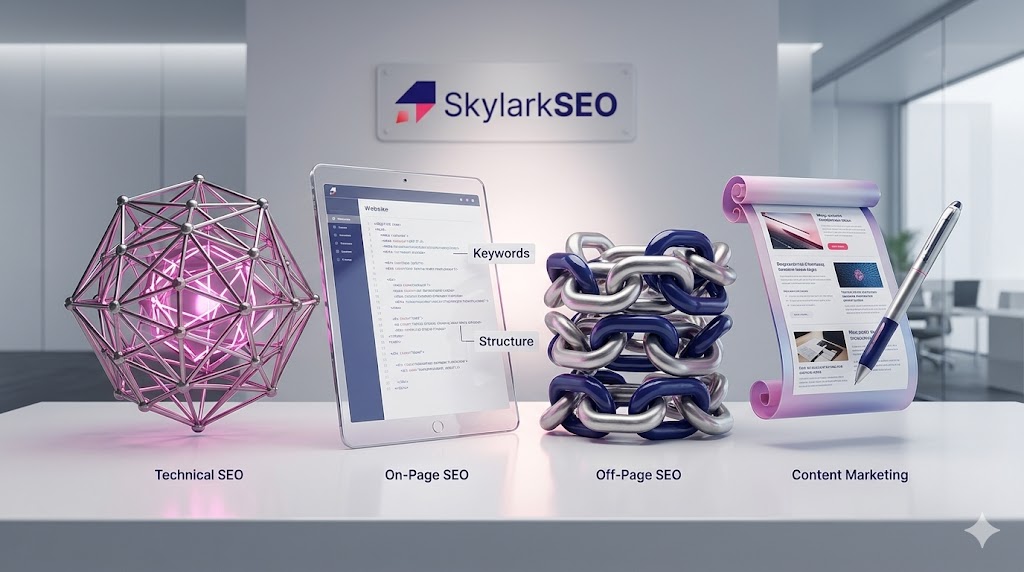
1. Technical SEO
Site speed, mobile responsiveness, URL cleanliness, site architecture and structure data fall under the scope of Technical SEO. If your page loads fast and functions smoothly, Google provides you with higher rankings than sites that load slowly or function poorly.
2. On-Page SEO
On-site optimisation includes: keyword optimisation, meta-tags, how your content is structured, internal links, and how relevant your site is to Search Engines. By optimising on-site elements correctly, you allow Search Engines to properly identify what your site is about.
3. Off-Page SEO
A large component of Off-Page SEO is establishing Credibility through building links back to your site, Brand mentions, and partnerships with others. Establishing a strong Off-Page profile establishes your Credibility with Search Engines.
4. Content Marketing
Quality Content is the backbone of all SEO. Quality Content comes in many forms: Blog posts, Guides, scripts for Videos, Product Pages, and Answers to frequently asked questions. Quality Content appeals to the type of users you are trying to attract and ranks for the keywords that they are searching for. Quality Content solves problems for Users, and ultimately for Customers.
Advantages of SEO

- Lower Cost of Advertising than Pay-per-Click
- Long-term benefits from SEO
- Improves Brand Credibility
- Improves User Experience
- Can generate high Intent Organic Traffic
SEO grows gradually but steadily, while building authority takes a bit of time. Once you have established authority, your traffic becomes consistent and predictable.
What Is SEM?
SEM (Search Engine Marketing) is advertising to help your business become visible on search engine results pages instantly. Usually, this will be done through Pay Per Click (PPC) advertising, specifically, Google Ads.
The way that SEM works is by bidding for visibility on Search Engines. You’re competing with other advertisers for placement at the top of the listing for your ad. However, you’re only charged for the ad when someone clicks through your link. SEO takes time for a company to build a reputation, while SEM provides companies with visibility and results almost immediately.
When working with an expert social media marketing company, they combine their search advertising with other digital marketing strategies. This helps in better ranking and online visibility across all platforms.
Key Components of SEM
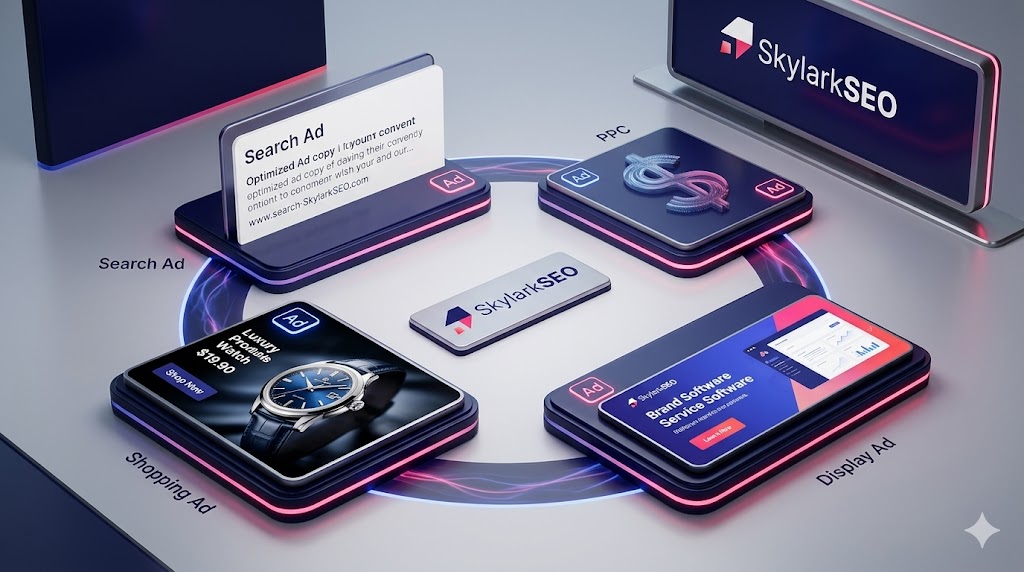
1. Search Ads
These are at the top of search engine results pages with an “Ad” icon next to them. Search Ads are highly effective when the organic search rankings are for a competitive keyword.
2. PPC Advertising (Pay-Per-Click
This is a search engine marketing model that allows you to bid on keywords used by your desired audience when they are searching the internet for products or services similar to your offerings. Through exciting campaigns, you can focus your PPC efforts on conversions, brand awareness, and sales.
3. Shopping Ads
These are designed specifically for e-commerce businesses. These ads allow you to display images, prices, and deals directly on Google’s product listing pages.
4. Display Ads
Display ads are seen on websites all over the world. Display ads are designed to help build your business’s visibility, increase website retargeting possibilities, and create brand recognition.
Benefits of using SEM
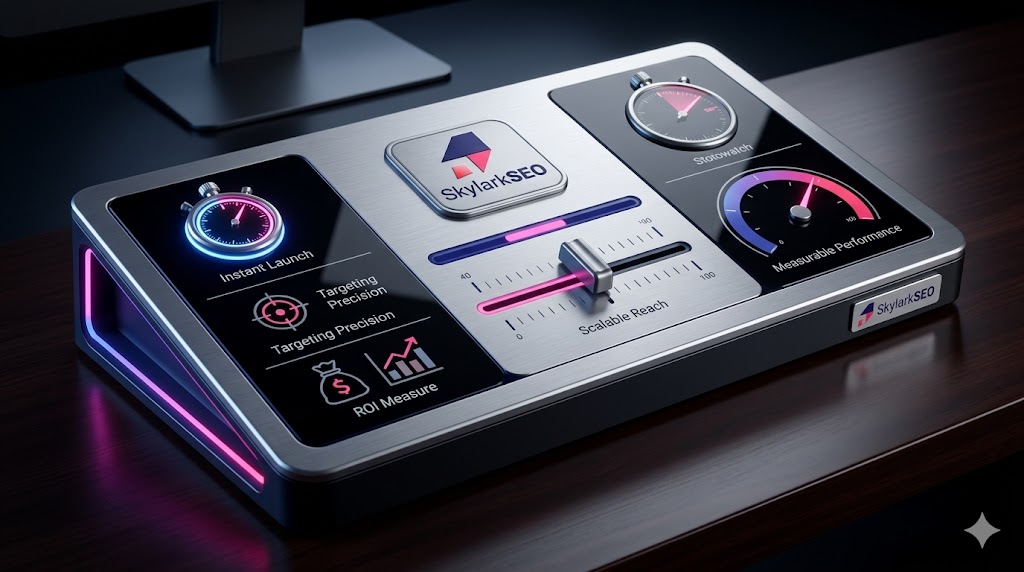
- Instant visibility
- Target the ability for a more precise reach
- Highly measurable performance
- Great for new product launches or businesses
- Scalable based on budget
SEM is an excellent way to quickly build a client base. It’s ideal for fast-growing companies that want to maintain their lead over their competition during peak selling seasons.
SEO vs. SEM: Core Differences
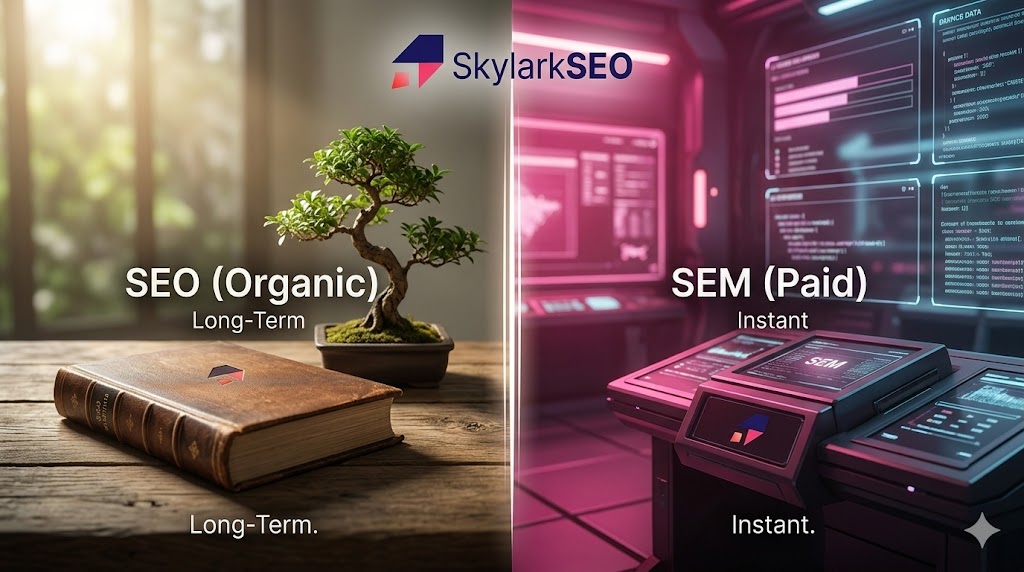
Here are some major differences between SEO and SEM:
1. Organic vs. Paid
- SEO is an organic way to drive traffic to your website, while SEM is a way to pay for that traffic.
- SEO has a long-term effect, whereas SEM is temporary.
2. Time Frame
- SEO takes time and effort (typically a couple of months). On the other hand, SEM produces immediate results once the campaign is launched.
3. Cost Structure
- SEO needs expertise, effort, and content investment. Plus, it’s not based on clicks.
- SEM, however, involves bids, daily budgets, and cost-per-click structures. The cost of SEM depends on a business’s niche and competition.
4. Click-Through Behaviour
- Users have more confidence in organic search results than in paid advertisements. So, SEO generally attracts higher-quality visitors than SEM.
- SEM attracts visitors who are seeking immediate gratification or commercial information, which can be beneficial to conversions.
5. Longevity
- The benefits of SEO can endure for an extended time, even during periods when SEO efforts have ceased.
- On the other hand, SEM’s visibility and placement disappear the moment you stop investing.
Which One Should You Choose? SEO or SEM?
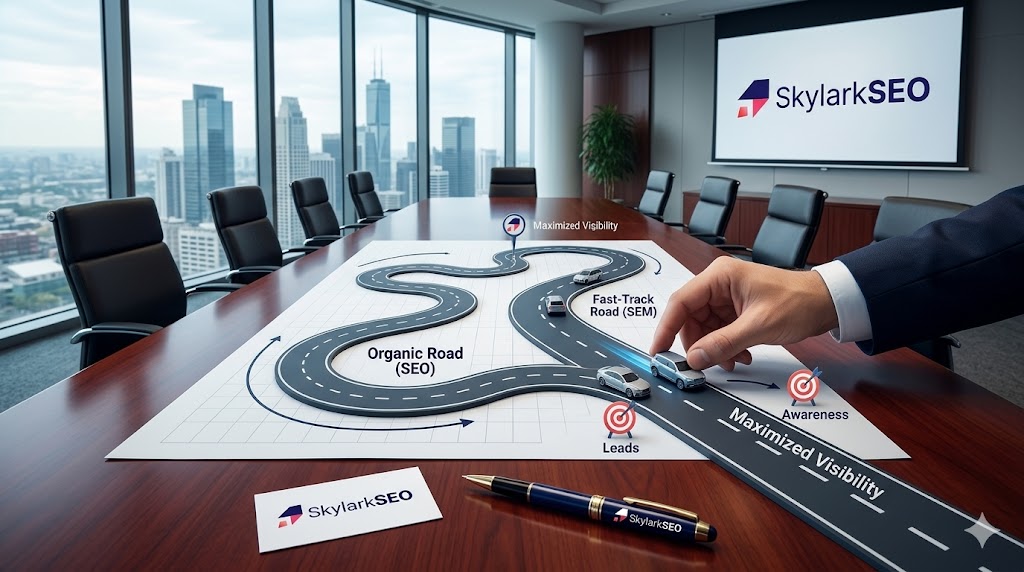
It depends on your objectives. The majority of businesses select to pursue both options. According to Skylark SEO, a premier digital marketing agency, this approach allows companies to maximize short-term revenue. Plus, it provides ongoing brand support to create sustainable revenue over time.
Use SEO when you:
- want your business’ long-term sustainable growth,
- desire to build authority for your brand,
- want an affordable way to get results over time, and
- operate within a market with moderate competition.
SEO is beneficial for businesses that want to achieve higher rankings in organic search, gain trust among their audience, and create a strong presence in the digital marketplace.
Implement SEM when you:
- require immediate traffic or leads,
- are introducing a new product/service,
- compete for high-intent keywords,
- would like measurable and scalable outcomes.
SEM is best used when time and immediacy are critical.
Use both SEO and SEM when you:
- want to take advantage of both options,
- are in a very competitive market,
- are following an aggressive growth model, and
- want to show up for organic and paid listings.
The professionals recommend the combination of SEO and SEM to achieve maximum visibility. SEO provides a long-term anchor and SEM provides quick results, sales, and peaks in campaign activity.
Final Thoughts
SEO and SEM are partners, not rivals! SEO helps to build brand credibility and loyalty through organic results over time. And, SEM provides short-term ROI by being able to target users via paid advertisements. With a comprehensive strategy that combines both techniques, businesses can maximize their online visibility and ranking.
At Skylark SEO, we help businesses with a combination of both SEO and SEM strategies. Hence, we yield the highest return on investment possible while attaining your unique business objectives.