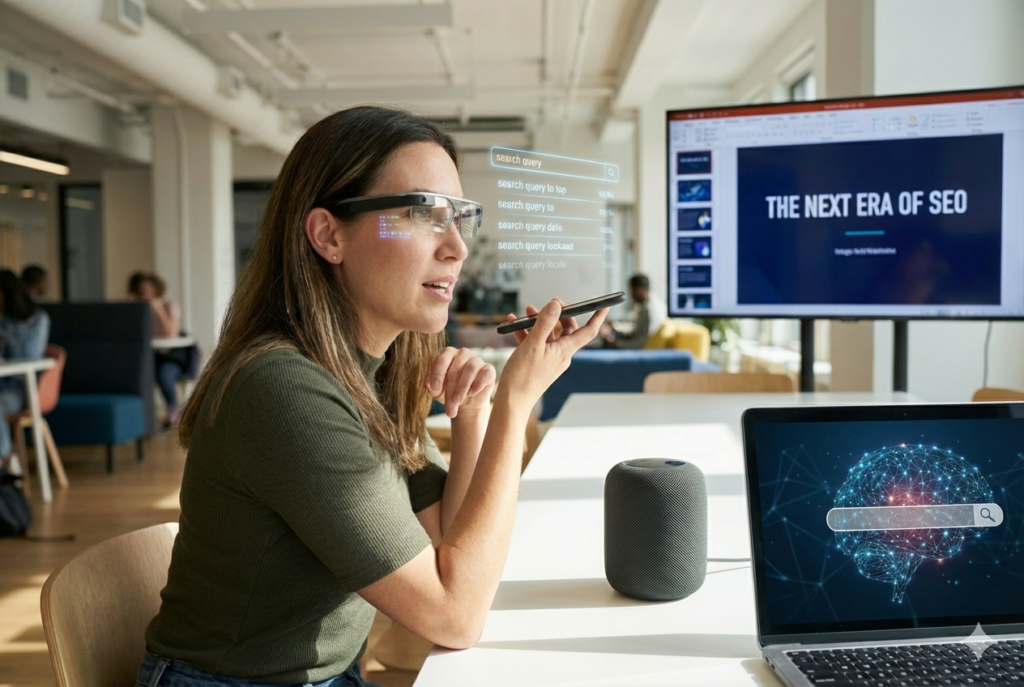
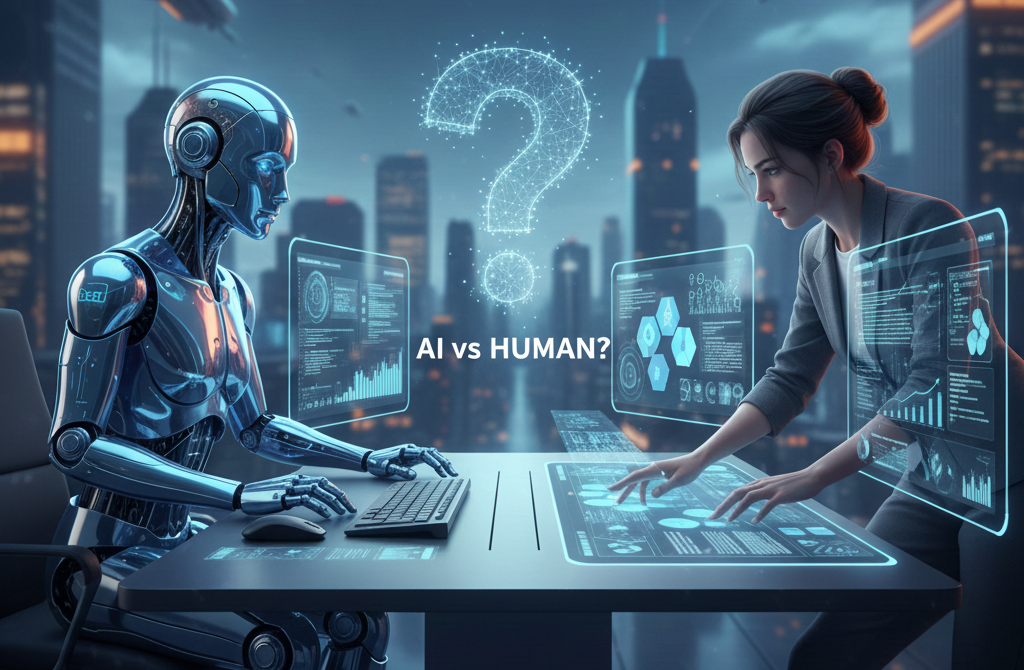
Artificial Intelligence (AI) has totally transformed the way we do digital marketing, particularly the SEO landscape. In 2026, we will have more advanced AI-driven tools than ever before. So, it’s easier to audit websites in minutes, predict user behavior accurately, and generate content within seconds. Due to this fast evolution, many businesses have started wondering: Can AI replace human SEO strategists? Or whether human expertise is irreplaceable in today’s AI-dominated era?
Well, the answer is not a straight “yes” or “no.” Instead, it is a combination of the strengths of both human and AI strategies. AI can accelerate, automate, and boost SEO tactics. But it cannot completely replace the strategic creativity, oversight, and intuition that human professionals offer.
The Rise of AI: What Has Changed by 2026?
AI has made a huge leap between 2020 and 2026 in predictive analytics, natural language processing, and machine learning. Even search engines have become compatible with the evaluation of content based on user intent, authenticity, semantic relationships, and behavioral patterns.
Today, AI tools are able to:
- Easily predict ranking changes with amusing accuracy.
- Analyze several keywords with deeper contextual understanding.
- Automatically monitor competitor performance.
- Create articles, outlines, and landing pages within minutes.
- Optimize internal lining and metadata structures.
All these abilities have changed how modern SEO works. Tasks that once felt time-consuming are now easily completed within minutes. Data that once needed manual analysis is instantly processed. In short, AI is more like an undeniable force for handling modern SEO operations with ease.
But does this mean that it can replace a human SEO strategist?
The Human Mind Still Holds Strategic Power
Despite the evolution of AI, there are various SEO aspects where humans can outperform machines even in the era of automation.
1. Comprehending Complex Business Goals
AI can easily analyze data, but it inherently cannot understand a business’s long-term goals, customer psychology, market positioning, or brand tone. On the other hand, human strategists can easily connect local search engine optimization services with real-world priorities of a business, whether it’s increasing regional visibility, elevating brand authority, or driving targeted leads.
2. Emotionally-Driven Messaging
While AI can quickly generally well-structured content, it cannot replace humans’ emotional resonance. A human writer is able to craft storytelling-driven content better while fostering connection, brand loyalty, and trust. All these qualities are highly prioritized by search engines for better SEO ranking.
3. Creative Thinking and Innovation
When it comes to SEO, you do not just have to follow rules. You need to explore opportunities that others may overlook. This is where humans excel:
- Storytelling
- Experimentation
- Branding-focused
- keyword integration
- Creative content creation
- Out-of-the-box strategies to make a business stand out.
AI generally functions within patterns that are already framed; humans create their new patterns whenever required.
Why AI Alone Can’t Navigate SEO’s Grey Areas
SEO is loaded with ambiguity, so every ranking shift doesn’t have a clear explanation. Even search intent is not always obvious from the raw data. Even every content idea cannot be quantified before its execution. This is where humans excel: in properly interpreting ambiguity.
Example: Search Intent Analysis
Typically, AI is able to categorize intents, like informational, navigational, or transactional.
However, a human can better judge:
- The slight differences between similar questions.
- The emotional factors behind searches.
- Which particular format builds trust (comparison chart, video, long-form content, etc.).
- What target audiences want to solve or feel.
With rapidly evolving search intent, users are searching queries more in a conversational language. This exact understanding comes naturally to only humans.
Content Creation: Enhanced by AI, Refined by Humans
One of the biggest impacts of AI in SEO is content production. AI can now generate high-quality first drafts, outlines, and topic clusters quickly.
However:
- Humans refine tone and brand voice.
- Humans ensure factual accuracy.
- Humans inject creativity and personality.
- Humans add examples, case studies, and unique insights.
- Humans ensure content is differentiated, not generic.
Search engines reward authenticity and expertise, and that still requires human involvement.
Technical SEO: AI Helps, Humans Direct
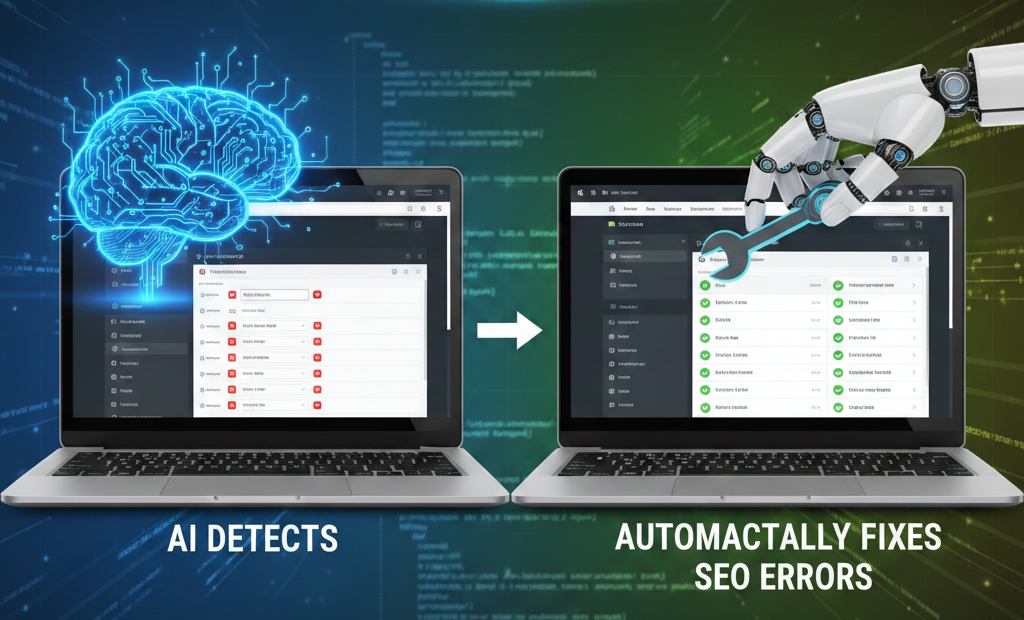
Artificial Intelligence is very powerful in identifying:
- Indexing problems
- Broken links
- Duplicate content
- Page speed issues
- Core Web Vitals fluctuations
However, technical SEO is not only about fixing the issues. It also involves better decision-making.
A human strategist still has to figure out:
- How specific problems align with their overall SEO strategy.
- Which solutions matter the most?
- How technical optimizations impact user experience and branding.
- What should be one’s long-term technical roadmap?
While AI cannot understand one’s business priorities, humans understand them very well. Hence, human intervention is much needed when it comes to managing SEO strategies effectively.
AI and SEO Tools: Partners, Not Replacements
AI is now seen as a strong assistant in the digital world; however, it’s more like an extension for boosting human strategy.
By 2026, the successful SEO professionals won’t be the ones who solely rely on human expertise or AI, but those who combine both. A human strategist must know how to guide AI tools, figure out insights, and execute data-backed strategies with better judgment and creativity.
After all, AI offers speed, and humans give directions. So, when combined to work as partners, they can deliver excellence that most businesses strive for.
Industry-Specific SEO Still Needs Human Judgment
Some industries require specialized understanding that AI cannot offer:
- Healthcare (compliance and sensitivity)
- Finance (accuracy and trust-building)
- Legal (high stakes and nuance)
- Manufacturing (technical terminology)
- FMCG and food processing (regional and supply-chain nuances)
AI can assist with content, but strategy and subject-matter expertise must still come from human professionals.
Where AI Truly Excels and Should Be Used Extensively
While humans still are important, AI is quickly dominating various high-impact areas that need speed, deep data analysis, and scale. By 2026, all these abilities of AI will become indispensable in advanced SEO workflows, whether for ecommerce SEO services, local SEO services, or other SEO requirements.
1. Predictive SEO
With AI models, it’s easier to forecast which pages are likely to drop or increase in rankings. It can also interpret which keywords will increase traction and how algorithm shifts may impact certain content types. This enables brands to follow a proactive approach rather than taking measures when visibility drops.
2. Keyword Research at Scale
AI analyzes various search queries, detects emerging micro trends, and clusters intent-driven terms before they peak. This helps in identifying gaps that competitors may miss while mapping keywords to user journeys with accuracy that manual techniques cannot match.
3. Automation of Repetitive Tasks
Certain repetitive tasks, like alt-text generation, metadata creation, broken link detection, crawl diagnostics, and internal linking recommendations, are easy to manage by AI. These otherwise time-consuming tasks are easy to run automatically in the background.
4. Real-Time Search Behavior Tracking
AI can instantly detect changes in user intent, particularly during trending events. especially during trending events. It helps in altering strategists about SERP shifts, updates keyword clusters, and suggests timely content adjustments.
Overall, AI helps in tackling heavy operational load, empowering human SEO strategists to concentrate more on their decision-making, creativity, and long-term plans.
Conclusion:
For those wondering: can AI really replace human SEO strategists by 2026? The answer is NO. It can redefine certain roles and empower SEO professionals to work more accurately, quickly, and with a better understanding. However, it cannot replace human creativity, insight, ethical judgment, contextual thinking, or strategic planning.
The future of SEO appears to rely on a collaborative model, where AI works as a powerful engine, and humans act as thoughtful drivers. It is best to consult a professional SEO company, like Skylark SEO, to help you blend both for thriving in today’s highly competitive digital landscape.